AIMode.newsSearch
Live

On this day in space! Aug. 15, 1977: Mysterious 'Wow!' Signal boosts search for E.T.

S

Space.com

AIMode News Desk · curated summary

1 min readScience

Automated news aggregation. Headlines and summaries are gathered from public feeds; see our editorial standards for sourcing, corrections, and AI-assist disclosure.
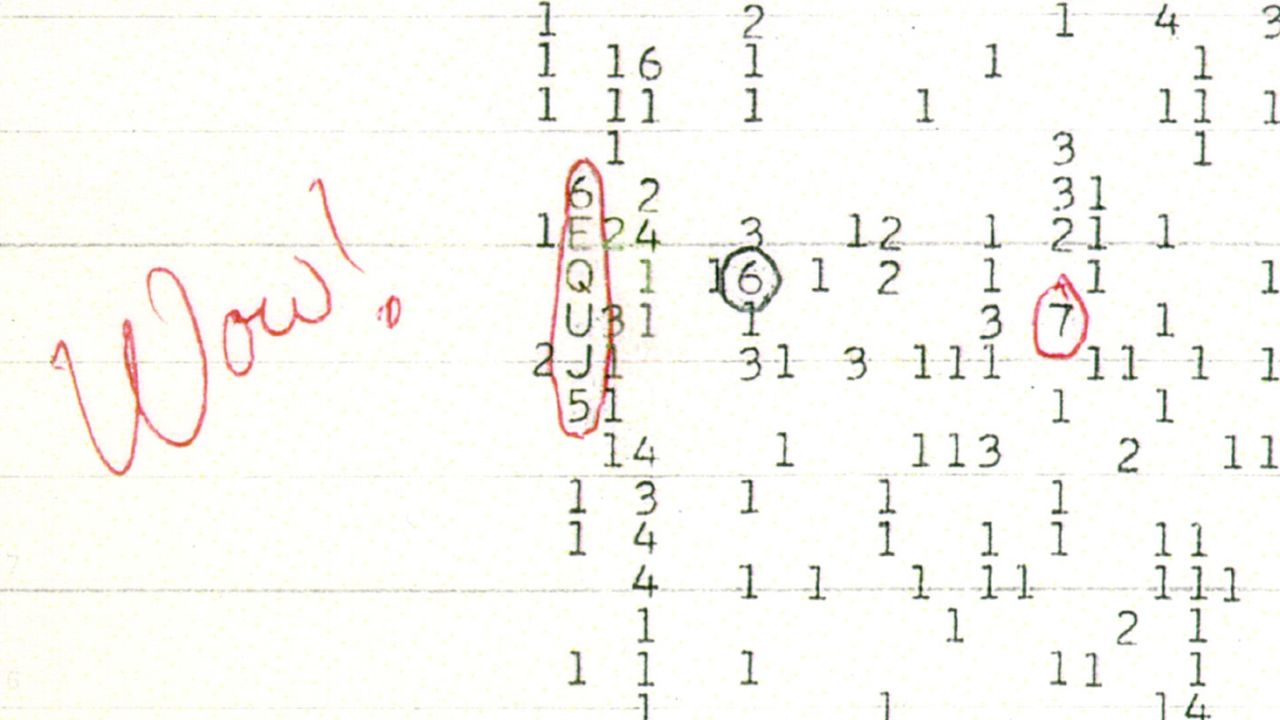
On this day in space! Aug. 15, 1977: Mysterious 'Wow!' Signal boosts search for E.T.

On Aug. 15, 1977, astronomers using Ohio State University's Big Ear radio telescope detected the famous "Wow!" signal, which remains unexplained to this day.

Advertisement

About this story

This story was aggregated from Space.com. Headlines, summaries, and links are gathered automatically from public RSS feeds for your convenience.

Read the full story →

For agents:JSON recordOpenAPIWebMCPllms.txt

Advertisement

More in Science

Science

Neptune's tiny moons tell the story of Triton's destructive capture

Neptune's moon and ring system stand out among the giant planets because of the strange imbalance between its one very large moon and its many tiny moons. Its largest moon, Triton, makes up more than 99% of the mass of all satellites orbiting the planet while orbiting retrograde compared with Neptune's rotation. The predominant theory is that Triton is a captured Kuiper Belt object that caused a major disruption in Neptune's early moon system. Now, a new study published in Science Advances provides spectroscopic evidence to support this theory.

Phys.org ·

Science

A 30-year-old fossil was hiding bones from a mysterious ancient sea monster

Fossils collected in Osaka more than 30 years ago have revealed a surprise hiding in plain sight: four previously unrecognized bones from a giant Cretaceous mosasaur. Among them is the first confirmed premaxilla—the frontmost bone of the upper jaw—ever identified in a Japanese mosasaur fossil. Even more intriguing, parts of the skull show unusual anatomical features that don’t match known mosasaurs, raising the possibility that the remains belong to an entirely new species.

ScienceDaily ·